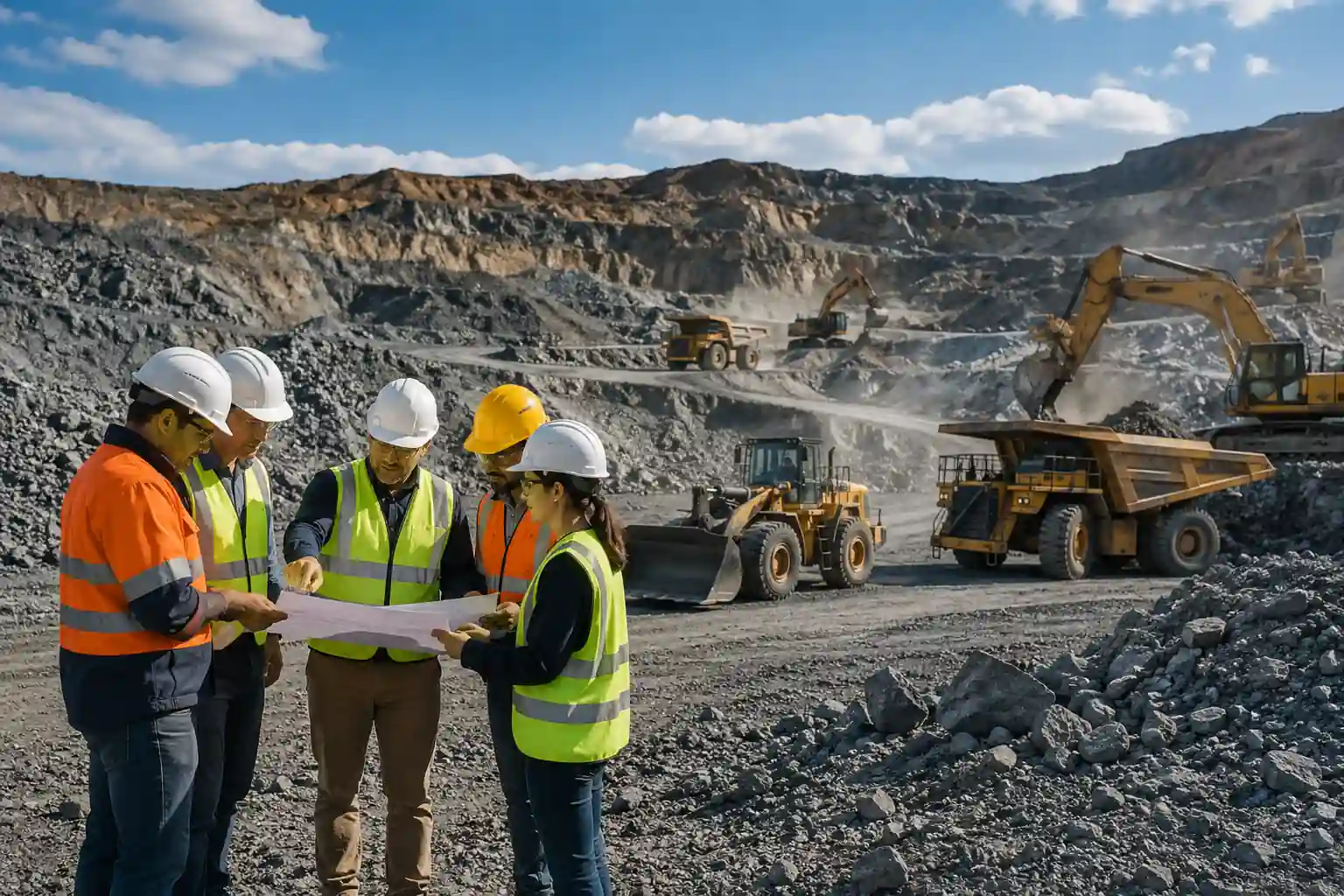
maschinenring mining
Have you ever wondered how large mining operations manage sudden labor shortages, seasonal peaks, or highly specialized field tasks without permanently expanding their workforce? And what if part of the answer comes not from traditional mining agencies—but from rural agricultural cooperatives?
That’s exactly where the concept of Maschinenring mining becomes interesting. It’s not a widely discussed term in mainstream industry conversations, yet it reflects a growing intersection between agriculture-based labor networks and heavy industrial operations like mining.
At the center of this system is the well-known European cooperative model Maschinenring, which originally started as a machinery-sharing and labor-support organization for farmers. Over time, its flexible workforce model has expanded into construction, infrastructure support, and in some cases, mining-related services. This article breaks down what Maschinenring mining means, how it works, and why it is becoming relevant in modern industrial ecosystems.
What is Maschinenring and Why It Matters in Industrial Labor?
The concept of Maschinenring began as a simple idea: farmers helping farmers. Instead of each farmer owning expensive machinery that is only used a few weeks per year, they formed local rings (networks) to share equipment and labor. Over time, this idea evolved into a structured organization offering professional workforce solutions.
Today, Maschinenring is much more than just agricultural cooperation. It has grown into a diversified service provider supplying skilled and semi-skilled labor across multiple sectors, including landscaping, construction, forestry, logistics, and occasionally industrial support roles that overlap with mining operations.
The key strength of Maschinenring lies in its flexibility model. Instead of hiring permanent workers, companies can access trained workers when needed. This is especially valuable in industries like mining, where demand fluctuates depending on project phases, exploration cycles, and operational expansions.
In mining-related contexts, Maschinenring is not typically involved in extraction itself but rather in support services, such as land clearing, infrastructure preparation, equipment assistance, and environmental maintenance around mining sites. This indirect involvement is what people often refer to when they use the term “Maschinenring mining.”
Understanding the Concept of Maschinenring Mining
The term “Maschinenring mining” does not refer to a standalone mining company. Instead, it describes a service model where Maschinenring-type labor networks support mining operations through outsourced workforce solutions.
Mining companies often operate in remote or rural areas where hiring permanent labor can be expensive and inefficient. This is where cooperative labor systems become useful. Maschinenring provides access to workers who are already trained in outdoor labor, machinery handling, and terrain-based operations.
In practical terms, Maschinenring mining might include activities such as site preparation, vegetation clearing, road maintenance to mining zones, soil movement assistance, or even basic technical support under supervision. These tasks are essential for mining operations but do not always require specialized mining engineers.
Another important aspect is the seasonal adaptability. Mining projects often go through phases: exploration, construction, production, and rehabilitation. Each phase requires different labor intensity. Maschinenring-style networks allow companies to scale workforce up or down without long-term employment commitments, making operations more cost-efficient and responsive.
How Workforce Outsourcing Works in Mining Projects
Workforce outsourcing in mining is not a new idea, but the Maschinenring approach makes it more structured and community-based. Instead of relying solely on private staffing agencies, mining companies can collaborate with cooperative labor pools that already exist in rural regions.
In the case of Maschinenring, the organization maintains a database of available workers who are trained in different categories of fieldwork. When a mining company requests manpower, the cooperative assigns suitable workers based on skill level, availability, and location.
This system works particularly well for non-core mining activities, where the work is physically demanding but not highly specialized. Examples include hauling materials, assisting machinery operators, maintaining access roads, or supporting environmental compliance tasks.
The outsourcing model also reduces administrative burden for mining companies. Instead of handling recruitment, payroll, and training for temporary workers, these responsibilities are managed by the cooperative. This allows mining operators to focus more on production efficiency and safety compliance while still maintaining a flexible workforce structure.
Benefits of Maschinenring Models for Mining Companies
One of the biggest advantages of integrating Maschinenring-style labor systems into mining operations is cost efficiency. Hiring permanent staff for temporary tasks can significantly increase operational expenses. With cooperative labor, companies only pay for actual work performed, reducing idle labor costs.
Another key benefit is access to reliable rural labor pools. Many Maschinenring workers come from agricultural backgrounds, meaning they are already familiar with physically demanding outdoor environments. This makes them well-suited for mining support roles where endurance and adaptability are essential.
Additionally, the model improves scalability. Mining operations often experience unpredictable demand spikes. For example, during infrastructure expansion or exploration phases, additional labor is required quickly. Cooperative systems allow rapid workforce deployment without long hiring cycles.
Finally, there is a social benefit. Rural workers gain access to industrial income opportunities without leaving their communities. This helps stabilize rural economies while also addressing labor shortages in industrial sectors. In this sense, Maschinenring acts as a bridge between rural labor supply and industrial demand.
The Role of Rural Labor Networks in Mining Ecosystems
Rural labor networks play a surprisingly important role in global industrial systems. While mining is often associated with heavy machinery and high-tech engineering, a significant portion of work still depends on manual labor and field-level operations.
Maschinenring networks were originally built to support agriculture, but the skills developed in farming—such as machinery handling, land management, and environmental awareness—translate well into mining support tasks. This crossover is one of the reasons why Maschinenring mining services have become relevant.
In many cases, rural workers are also more geographically adaptable. Mining sites are often located in remote regions where local labor markets are limited. Cooperative networks solve this problem by mobilizing workers from surrounding agricultural areas who are willing to travel temporarily for work.
Moreover, these networks help reduce dependency on large urban recruitment centers. Instead of centralizing labor in cities, Maschinenring-style systems distribute economic opportunities across rural regions. This decentralization creates a more balanced labor ecosystem that benefits both agriculture and industry.
Technology and Modernization in Maschinenring Mining Services
The modern evolution of Maschinenring is heavily influenced by digital transformation. What was once a manual coordination system is now increasingly managed through digital platforms, workforce apps, and scheduling software.
In mining-related applications, technology plays a crucial role in matching workers to tasks efficiently. Digital systems can track worker availability, skill sets, certifications, and location in real time. This allows mining companies to request labor with much higher precision and speed than traditional hiring methods.
Another important development is the use of data-driven workforce planning. Mining companies can analyze project timelines and predict labor needs in advance. Maschinenring systems then align their workforce supply accordingly, ensuring minimal delays in project execution.
Additionally, safety training and compliance tracking have become more structured. Workers assigned to mining-related tasks often undergo standardized safety programs to meet industrial requirements. This ensures that even outsourced labor maintains a high level of operational safety and regulatory compliance.
Challenges and Limitations of Maschinenring in Mining Contexts
Despite its advantages, the Maschinenring model is not without challenges. One of the main limitations is skill specialization. Mining is a highly technical industry in certain areas, and not all tasks can be delegated to general labor workers. Maschinenring is best suited for support roles rather than core extraction processes.
Another challenge is coordination complexity. Managing a flexible workforce across multiple sites requires strong logistical systems. If scheduling is not handled properly, it can lead to inefficiencies or delays in mining operations.
There is also the issue of regulatory differences between agriculture-based labor systems and industrial mining standards. Mining often requires strict certifications, safety training, and compliance documentation. Ensuring that cooperative workers meet these standards consistently can be difficult without proper training infrastructure.
Finally, dependency risks can arise. If mining companies rely too heavily on external labor networks, they may face shortages during peak demand periods when multiple industries compete for the same workforce pool. This makes strategic planning essential when integrating Maschinenring-style services into mining operations.
The Future of Maschinenring Mining and Hybrid Workforce Models
Looking ahead, the concept of Maschinenring mining is likely to evolve further as industries continue to adopt flexible workforce strategies. The demand for scalable, cost-efficient labor solutions is increasing across global mining markets, especially in regions with fluctuating project cycles.
Organizations like Maschinenring are expected to play a larger role in hybrid labor ecosystems, where agriculture, construction, and industrial sectors share interconnected workforce pools. This kind of cross-sector collaboration could redefine how temporary labor is managed in heavy industries.
Automation and mechanization will also shape the future. While machines are taking over many core mining functions, human labor will still be required for maintenance, environmental management, and operational support. This ensures that flexible labor systems remain relevant even in highly automated environments.
In the long term, Maschinenring mining may not remain a niche concept. Instead, it could become part of a broader global model where rural labor networks serve as strategic workforce reserves for multiple industries. This shift would not only improve industrial efficiency but also strengthen rural economies in a sustainable way.
Final Thoughts
Maschinenring mining is not about a single company entering the mining industry—it is about a smart labor ecosystem that connects rural workforce networks with industrial demand. Through flexibility, cost efficiency, and community-based organization, the Maschinenring model demonstrates how traditional agricultural cooperation can evolve into a modern industrial support system.
As mining operations continue to demand more adaptable and scalable workforce solutions, systems inspired by Maschinenring are likely to become even more valuable. What started in farming fields may quietly continue shaping the future of heavy industry in unexpected ways.
About the Author