The Network Is No Longer Just Supporting the Compute Cluster
For a long time, networking was viewed as a supporting component inside data centers. Servers performed the computing, storage systems handled the data, and the network simply moved information from one place to another. As long as bandwidth was sufficient, most organizations didn’t spend much time thinking about optical interconnects.
That mindset is changing.
Modern AI clusters have reached a point where network performance directly influences computing efficiency. When thousands of GPUs are working together to train a model, they constantly exchange parameters, gradients, checkpoints, and synchronization information. The faster the GPUs become, the more pressure gets placed on the network connecting them.
In many environments, the challenge is no longer obtaining enough computing power. The challenge is ensuring that the infrastructure around the GPUs can keep up.
This shift is one of the reasons why 800G optical modules have become increasingly important inside modern AI and high-performance computing environments.
Why AI Clusters Need Something Different from Traditional Data Centers
Traditional enterprise traffic tends to be unpredictable. Some applications generate bursts of activity, while others remain relatively quiet. Network utilization rises and falls throughout the day.
AI workloads behave differently.
Large training jobs generate sustained traffic for hours, days, or even weeks. Every accelerator participates in a coordinated process where information must be exchanged continuously between nodes. If communication slows down, the entire training process slows down.
As clusters scale from hundreds of GPUs to thousands or even tens of thousands, these communication requirements become enormous.
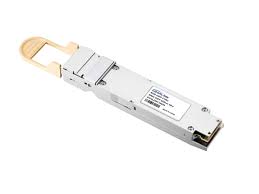
This is where the NVIDIA/Mellanox MMS4X00-NS compatible 800GBASE-DR8 twin-port OSFP module enters the picture. Rather than focusing on long-distance transmission, it is designed for the high-bandwidth, low-complexity connections commonly found inside AI fabrics.
The module supports 800Gbps transmission over single-mode fiber using PAM4 signaling and can reach distances up to 100 meters, making it particularly suitable for large-scale data center deployments where rack-to-rack and pod-to-pod connectivity dominate traffic patterns.
Why Single-Mode Fiber Is Gaining Ground Inside the Data Center
A few years ago, multimode fiber was the default choice for many short-distance optical deployments. It offered reasonable costs and worked well for the bandwidth requirements of the time.
But bandwidth requirements have changed dramatically.
As speeds moved from 100G to 200G, then to 400G and now 800G, maintaining signal quality over multimode infrastructure has become increasingly challenging. This is one reason why more operators are adopting single-mode fiber even for relatively short distances.
The DR8 architecture takes advantage of this trend.
Using 1310nm optics and dual MPO-12/APC connectivity, it delivers reliable 800G performance over single-mode fiber while maintaining relatively simple deployment characteristics. The result is a solution that supports higher bandwidth growth without forcing operators to rethink their entire physical infrastructure strategy every time network speeds increase.
For organizations planning long-term AI deployments, this becomes a significant advantage.
The Real Benefit of the 2×DR4 Architecture
Most people immediately focus on the 800G headline speed, but the twin-port 2×DR4 design may actually be one of the module’s most practical features.
Instead of functioning only as a single 800G connection, the architecture effectively provides two independent 400G channels within the same OSFP form factor.
This creates deployment flexibility.
Some operators use the module as a native 800G link between switches. Others take advantage of breakout configurations to support multiple 400G connections. In rapidly growing environments where infrastructure requirements evolve frequently, this flexibility helps prevent network designs from becoming locked into a single topology.
The ability to adapt is often just as valuable as the raw bandwidth itself.
Why Air-Cooled Infrastructure Still Dominates Most Deployments
Liquid cooling receives a lot of attention today, especially in discussions surrounding AI clusters. While liquid-cooled systems are becoming more common, the reality is that a large percentage of data centers still rely heavily on air-cooled infrastructure.
Because of this, thermal performance remains a critical consideration when selecting optical modules.
The finned-top OSFP design used in modules like the MMS4X00-NS compatible transceiver is intended to maximize airflow efficiency inside high-density switching platforms. Proper heat dissipation helps maintain signal stability and reduces the risk of thermal-related performance degradation.
Inside NVIDIA Quantum-2 InfiniBand and Spectrum-4 Ethernet switches, where dozens of high-speed transceivers may operate simultaneously, this becomes particularly important.
Reliable cooling isn’t a luxury feature. It’s part of maintaining predictable network behavior.
Network Efficiency Has Become More Important Than Peak Bandwidth
When organizations evaluate networking hardware, they often focus on maximum speed. While bandwidth is obviously important, efficiency has become an equally significant consideration.
A cluster containing thousands of GPUs represents a massive investment. If those accelerators spend time waiting for network synchronization to complete, overall productivity drops regardless of how powerful the hardware may be.
This is why high-speed optical modules are increasingly viewed as efficiency tools rather than simple connectivity products.
The purpose of an 800G DR8 link is not merely to move data faster. It is to reduce communication bottlenecks that limit the effectiveness of expensive computing resources.
As AI training jobs continue growing larger, the value of efficient communication only increases.
Preparing for the Next Stage of Infrastructure Growth
The demand for AI infrastructure shows little sign of slowing down. Every new generation of models requires more parameters, larger datasets, and greater computational resources.
As a result, cluster sizes continue expanding.
Networking technologies that seemed excessive only a few years ago are rapidly becoming standard deployment options. What was once considered a future-facing upgrade is now often viewed as a practical requirement.
The rise of 800G DR8 optics reflects this broader shift.
Organizations are no longer building networks solely for today’s workloads. They are building infrastructures that must remain relevant throughout multiple generations of AI growth.
Conclusion
The NVIDIA/Mellanox MMS4X00-NS compatible 800GBASE-DR8 (2×DR4) OSFP optical module represents more than just another increase in network speed. It reflects the changing role of connectivity inside modern AI and HPC environments, where efficient communication directly influences overall computing performance. With its single-mode fiber architecture, flexible twin-port design, support for Quantum-2 InfiniBand and Spectrum-4 Ethernet platforms, and air-cooled thermal optimization, it is well suited for the dense, bandwidth-hungry environments driving today’s AI expansion. As clusters continue growing larger and more interconnected, 800G DR8 optics are increasingly becoming a foundation for scalable infrastructure rather than an optional upgrade.
About the Author