logisths
Introduction to Logisths and Why It Matters Today
Logisths, more commonly known as logistics, is one of those behind-the-scenes systems that quietly keeps the modern world running. Whether you are ordering a product online, buying groceries from a local store, or receiving raw materials for manufacturing, logisths plays a central role in making sure everything arrives at the right place, at the right time, and in the right condition. Without it, global trade would simply fall apart, and businesses would struggle to survive in any structured way.
At its core, logisths is about planning, implementing, and controlling the movement and storage of goods, services, and information. It is not just about transportation, as many people assume. Instead, it includes inventory management, warehousing, packaging, order fulfillment, demand forecasting, and even customer service coordination. In short, it is a complete system that connects production with consumption in the most efficient way possible.
Today, logisths has become more important than ever due to globalization and e-commerce growth. Companies are no longer serving just local markets; they are shipping products across continents. This has made supply chains more complex and increased the need for highly organized logistics systems. Businesses that master logisths gain a strong competitive advantage because they can deliver faster, reduce costs, and improve customer satisfaction consistently.
Evolution of Logisths from Ancient Trade to Modern Global Networks
The history of logisths dates back thousands of years when ancient civilizations first began trading goods across regions. Early traders in Egypt, Mesopotamia, China, and Rome relied on basic transportation methods like animals, carts, and ships to move goods. Even though the systems were simple, the core idea of logistics—moving resources from one place to another efficiently—was already present.
As societies evolved, so did logisths systems. During the Industrial Revolution, the rise of factories created a need for more structured transportation and storage systems. Railways, steamships, and later automobiles transformed how goods were moved. This period marked the beginning of modern logistics, where speed, scale, and coordination started becoming important factors in trade and commerce.
In the modern era, globalization has completely reshaped logisths. Today, products are designed in one country, manufactured in another, and sold worldwide. This interconnected system requires advanced coordination across multiple countries, regulations, and transportation modes. Air freight, shipping containers, and digital tracking systems have made it possible to manage global supply chains with precision and reliability, something unimaginable in earlier centuries.
Core Components That Define Effective Logisths Systems
A successful logisths system is built on several key components that work together to ensure smooth operations. One of the most important elements is transportation. This includes selecting the right mode of transport such as road, rail, air, or sea depending on cost, speed, and distance. Transportation decisions directly impact delivery times and overall supply chain efficiency.
Another crucial component is warehousing and inventory management. Warehouses act as storage hubs where goods are stored before distribution. Proper inventory control ensures that businesses maintain the right stock levels—neither too much nor too little. Overstocking leads to increased costs, while understocking results in missed sales opportunities and customer dissatisfaction.
Order processing and fulfillment are also central to logisths. This involves receiving customer orders, picking the right products, packaging them securely, and delivering them to the final destination. Efficient order fulfillment systems reduce errors, improve delivery speed, and enhance customer experience. Many companies now rely on automation and software systems to streamline this process and reduce human error.
The Role of Technology in Modern Logisths Systems
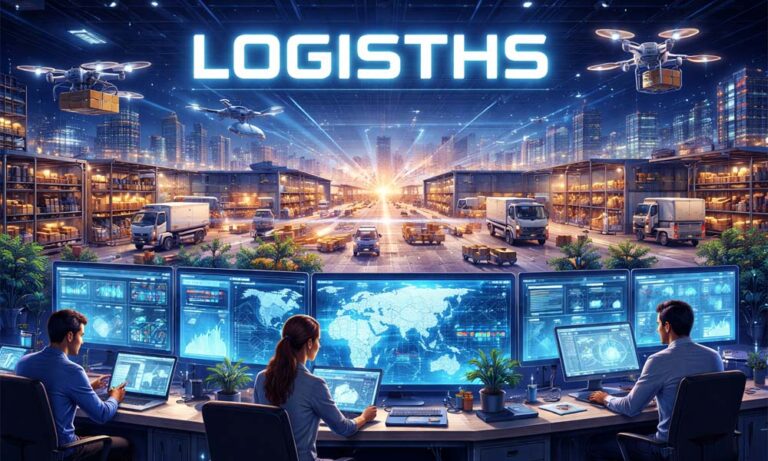
Technology has completely transformed logisths, turning it into a highly data-driven and automated industry. One of the biggest innovations is the use of tracking systems. GPS and RFID technology allow companies to track shipments in real time, giving both businesses and customers visibility into where goods are at any moment. This level of transparency has significantly improved trust and reliability in supply chains.
Another major advancement is the use of artificial intelligence and machine learning in logisths planning. These technologies help businesses predict demand, optimize delivery routes, and reduce transportation costs. For example, AI systems can analyze traffic patterns, weather conditions, and fuel costs to recommend the most efficient shipping routes, saving both time and money.
Automation and robotics are also playing a growing role in warehouses and distribution centers. Robots are now used for sorting, packing, and moving goods within warehouses, which increases speed and reduces human labor costs. Additionally, software systems like warehouse management systems (WMS) and transportation management systems (TMS) help companies coordinate complex logistics operations with minimal errors.
Challenges Faced in Logisths Management and Operations
Despite its advancements, logisths is not without challenges. One of the biggest issues is rising transportation costs. Fuel prices, labor expenses, and maintenance costs can significantly affect the overall cost of logistics operations. Companies must constantly find ways to optimize routes and improve efficiency to stay competitive in a cost-sensitive market.
Another major challenge is supply chain disruptions. Events such as natural disasters, political instability, pandemics, or global conflicts can severely impact logisths systems. For example, delays at ports or factory shutdowns can disrupt the entire supply chain, leading to product shortages and financial losses for businesses worldwide.
Managing customer expectations is also becoming increasingly difficult in modern logisths. With the rise of e-commerce giants offering same-day or next-day delivery, customers now expect extremely fast and reliable service. Meeting these expectations requires highly optimized logistics networks, strong infrastructure, and advanced forecasting systems, which not all companies can afford or maintain.
The Future of Logisths in a Rapidly Changing World
The future of logisths is expected to be heavily driven by automation, sustainability, and digital transformation. One of the biggest trends is the shift toward green logistics. Companies are increasingly focusing on reducing carbon emissions by using electric vehicles, optimizing delivery routes, and adopting eco-friendly packaging solutions. Sustainability is no longer optional; it is becoming a core business requirement.
Another major development is the rise of autonomous delivery systems. Drones and self-driving vehicles are being tested and gradually introduced in logistics operations. These technologies have the potential to significantly reduce delivery times and labor costs while increasing efficiency in urban and remote areas. Although still in early stages, they represent a major shift in how goods may be delivered in the future.
Finally, digital integration will continue to reshape logisths systems. Blockchain technology, for example, is being explored for improving transparency and security in supply chains. It allows every transaction and movement of goods to be recorded in a secure and unchangeable system. Combined with AI, IoT, and big data analytics, the future of logisths will be more intelligent, predictive, and efficient than ever before.
Conclusion: Why Logisths is the Hidden Engine of the Global Economy
Logisths is far more than just moving goods from one place to another. It is a complex, interconnected system that supports global trade, business operations, and everyday life. From ancient trade routes to modern AI-driven supply chains, it has continuously evolved to meet the demands of changing economies and technologies.
In today’s fast-paced world, businesses that invest in strong logisths systems gain a major advantage in efficiency, customer satisfaction, and profitability. As technology continues to advance, logistics will only become more sophisticated, automated, and sustainable.
Ultimately, logisths is the invisible force that keeps the global economy moving. Without it, modern commerce as we know it would not exist.
About the Author